
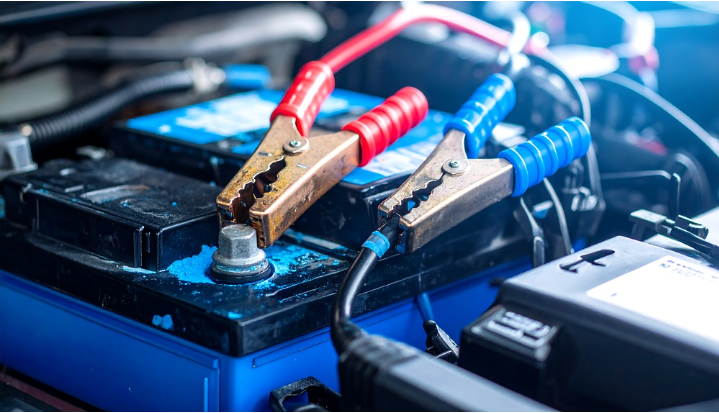
Portable jump starters have proven themselves worthy replacements for the old practice of car-to-car jumping. They are easy to use, highly effective, and quite affordable. But consumers who know little to nothing about how jump-starting works should not be quick to buy the first portable unit they find online. They need to understand the details first, like the difference between peak amps (PA) and cranking amps (CA).
For many of us, that education begins with learning what an amp actually is. Amperage is a measurement of the amount of current flowing through a circuit. It is different from voltage. If you were to think of it in terms of water flowing through a hose, amps would be equivalent to the volume of water in the hose while volts would be equivalent to the amount of pressure the water is under.
In a jump-starting scenario, you need enough current to overcome engine compression, oil viscosity, and a few other things that are working against you. You should have no trouble turning the engine over with enough amps.
The Peak Amps Measurement
With the definition of amperage out of the way, let us talk about the peak amps measurement. Peak amps tell you the highest amount of current a jump starter can push out at any given moment. In nearly every case, peak amperage occurs at the beginning of the jump-starting process. It lasts only a fraction of a second.
Clore Automotive, a company that designs and builds industry-leading portable jump starters, says the peak amps measurement is more of a marketing thing than anything else. It does not really tell you anything about the ability of a particular jump starter to get your car going on a cold, winter morning. Clore Automotive is more interested in cranking amps when designing new models. Consumers should be too.
A Cranking Amps Measurement
Cranking amps is a measurement of the amount of current a jump starter can deliver continuously over a set period of time. Typically, cranking amps are measured over 30 seconds at a base temperature of 32°F.
Where peak amps is a measurement of the highest possible current at a given moment, cranking amps is a measurement of the volume of current that consistently flows while you are trying to turn the engine over. It is like the difference in measuring the amount of water that comes out of the host when you first turn the spigot on as compared to how much consistently flows out over the course of a minute.
If I were shopping for a portable jump starter, I would be more interested in cranking amps. Why? Because it’s impossible to start a car in a fraction of a second. Most jump-starting scenarios take at least a few seconds. Under extreme conditions, you might have to crank for 5-10 seconds to get the car going. You need dependable cranking amps rather than an exceptionally high peak amperage.
Why It Matters When Jump Starting
All of this matters when you’re jump-starting a car because you are working against natural forces. The biggest force you are trying to overcome is engine compression. The bigger the engine, the more compression you are fighting during a jump start.
Oil viscosity is another issue. Thick, viscous oil doesn’t lend itself well to starting an engine. So between cold oil and engine compression, you need plenty of power to get a car started. You also need that power sustained over several seconds. That is why cranking amps are far more important when you’re buying a portable jump starter.