
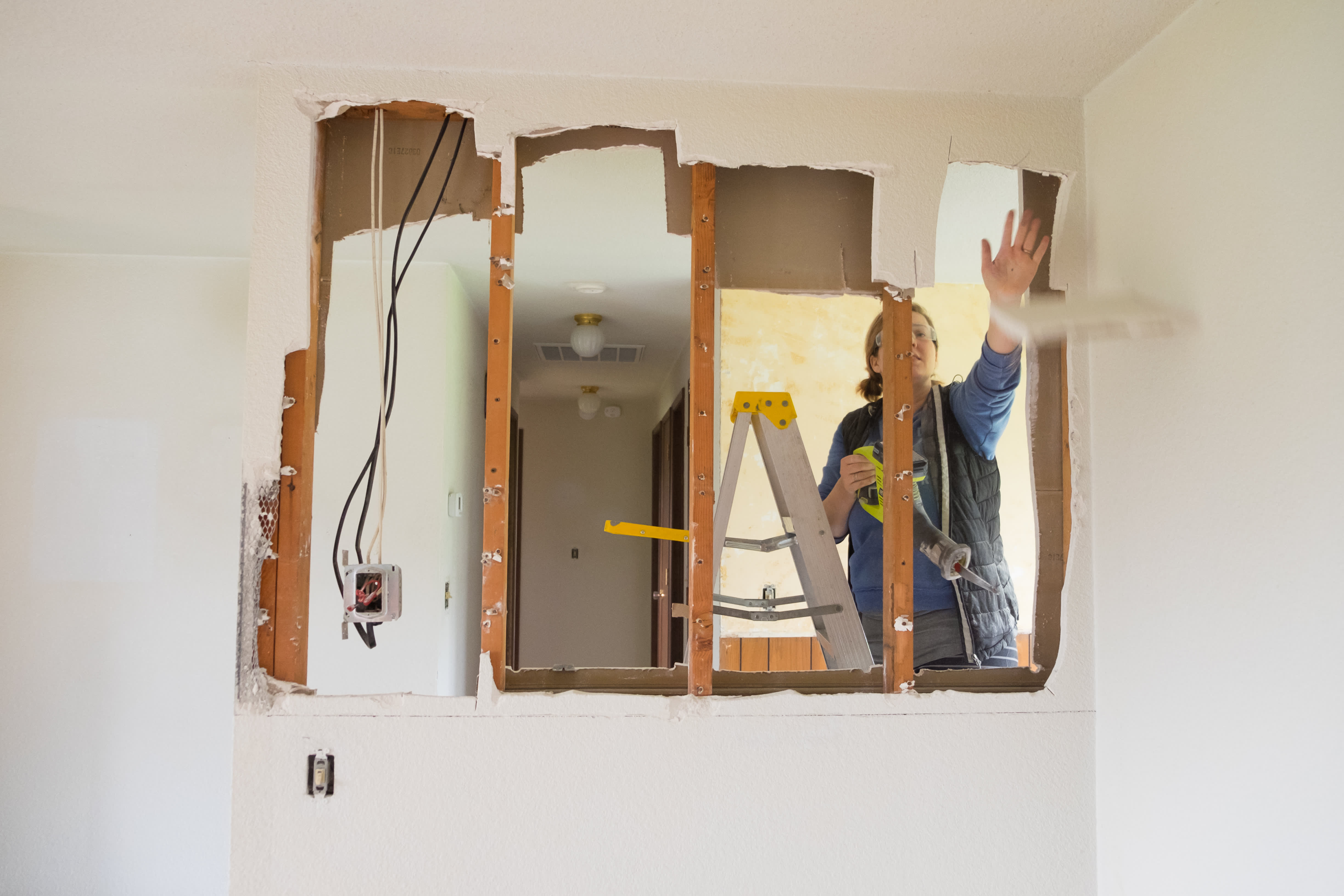
Most homeowners don’t think about what’s happening inside their walls, until something goes wrong. But the space behind your drywall is more active than it seems, constantly reacting to air, temperature, and moisture. Whether it’s subtle condensation or the early signs of a hidden leak, these issues often develop long before you’d ever think to call a plumber.
Moisture Inside Walls House Explained
Your walls aren’t static, they’re constantly interacting with air, temperature, and humidity, which is exactly how moisture inside walls house conditions develop over time.
Behind your walls, air is always moving, even if you can’t feel it. Every time your HVAC system runs, a door closes, or wind hits your home, pressure changes push air in and out of wall cavities.
That air carries moisture from everyday activities like cooking, showers, and even breathing. It slowly moves into walls through tiny gaps, outlets, seams, and even drywall pores. When warm, humid air enters a cooler wall cavity and hits colder surfaces like sheathing, pipes, or framing, it condenses into water. This is called interstitial condensation, and it can happen even without a leak, one of the hidden drivers of moisture inside walls house issues.
Moisture also enters from outside through small cracks in siding or around windows, especially when vapor barriers or insulation are poor. HVAC-related pressure differences can further push or pull humid air into walls, increasing moisture inside walls house risks.
Even in a “dry” house, these small cycles can repeat many times a day, meaning your walls can quietly accumulate and cycle moisture over time without any obvious signs.
How a Water Leak in Wall Starts
Most wall leaks don’t start as dramatic pipe bursts, they start small and slow, often as inconsistent issues rather than obvious failures. A pipe joint loosens slightly, a tiny crack forms in a supply line or drain pipe, issues with appliances like water heaters that may require water heater repair develop, or caulking around a window begins to fail and lets rain seep in. Roof or siding problems can also allow water to travel down inside walls, eventually becoming a water leak in wall situation.
Water doesn’t pour out, it seeps, sometimes only under pressure or certain conditions. What makes a water leak in wall difficult to notice is how water behaves once it enters the wall. It rarely comes straight through drywall. Instead, it follows framing, insulation, and gravity, spreading sideways or downward before becoming visible.
Drywall can absorb a surprising amount of moisture and still look normal, and in some cases water partially evaporates inside the wall, hiding early signs completely. By the time staining or damage appears, the water leak in wall has often been active for weeks or months.
Signs of Water Leak in Wall to Watch For
Not all signs of water leak in wall are obvious water stains, those are often not the first to appear. The subtle ones are usually more important.
Soft or slightly swollen drywall, even without discoloration, can be an early indicator. Paint that bubbles, peels, cracks, or feels uneven, along with baseboards or trim that start to warp or separate, often points to underlying moisture, classic signs of water leak in wall.
A faint musty smell that comes and goes is another common sign. Temperature differences can also reveal issues, one section of a wall may feel cooler or damp due to moisture affecting insulation. You might also notice higher-than-normal humidity in a specific room or even a sudden increase in your water bill if a plumbing leak is involved, including issues related to a water heater.
In many cases, the earliest signs of water leak in wall are sensory, something feels “off” before it looks damaged, and that’s often when a hidden leak is developing.
How to Check for Hidden Water Leaks in Walls
Think like a detective, combine multiple clues instead of relying on one.
Start by comparing areas rather than inspecting one spot in isolation, since differences are often more revealing than obvious damage. Run your hand along the wall to feel for temperature or texture changes, noticing if one section feels cooler, softer, or slightly uneven.
Pay attention to musty or earthy smells, especially after activities that increase humidity like showers or cooking, as they often signal moisture and microbial growth. A bad smell coming from inside wall can be one of the earliest indicators.
Listen for quiet hissing or dripping behind walls, particularly at night when the house is quieter. You can also turn off all water and check your water meter, if it continues to move, it may indicate a hidden plumbing leak.
Then step it up by using a moisture meter to scan drywall, focusing first on high-risk areas like around plumbing lines, near water heaters that may be overdue for water heater maintenance, near windows and exterior walls, or below bathrooms and kitchens.
Checking under different conditions, after heavy rain, long showers, or periods of high water use, can help you detect water leaks behind walls that stay hidden at other times.
How to Detect Water Leaks Behind Walls
There are surprisingly effective non-invasive methods based on how moisture changes temperature, density, and material behavior when you need to detect water leaks behind walls.
Thermal imaging cameras can reveal cooler areas where moisture is present, since wet materials retain and transfer heat differently than dry ones. Moisture meters can detect elevated moisture levels inside drywall without cutting into it, while even basic infrared thermometers can help spot unusual cold patches across a wall.
Pressure testing plumbing systems can confirm leaks without opening anything up. Tracking humidity in individual rooms can also point to hidden issues, if one room consistently holds more moisture than others, it’s a strong red flag when trying to detect water leaks behind walls.
Pros don’t guess, they look for patterns and typically confirm findings by combining multiple methods rather than relying on a single reading to detect water leaks behind walls accurately.
What Causes Mold on Walls Inside Your Home
Mold doesn’t need a flood, it just needs moisture, organic material like drywall paper or wood, and time, which explains many causes of mold on walls.
Mold forms when moisture remains in place long enough for spores to grow, and that moisture doesn’t have to come from a visible leak. Hidden mold often develops from slow leaks that never fully dry, or from repeated cycles of condensation inside poorly insulated walls, common causes of mold on walls.
Warm indoor air enters a wall cavity, meets a cooler surface, and leaves behind a thin layer of moisture that builds up over time. Air leaks can also bring humid air into cool cavities, adding to the problem.
The key insight is that mold is usually an airflow + moisture problem, not just a water problem, and it often develops as an ongoing but subtle pattern, one of the main causes of mold on walls in modern homes.
Causes of Mold on Walls Behind Surfaces
Behind-the-wall mold usually comes from a combination of moisture, airflow, and temperature differences, it’s rarely just “too much moisture,” but moisture + trapped air + temperature mismatch, which are core causes of mold on walls.
Condensation cycles play a major role, as warm air repeatedly hits cold surfaces inside walls, especially where thermal bridging or poor insulation creates cold spots. Poor ventilation in bathrooms, kitchens, and laundry areas can push moisture into walls.
HVAC imbalances create pressure differences that pull humid air into wall cavities or trap it there. A leaky building envelope can add to the problem, allowing rainwater to enter through siding, flashing, or roof lines.
The issue is usually not a single event, but a pattern, small amounts of moisture introduced repeatedly without enough time or airflow to dry out, reinforcing ongoing causes of mold on walls.
Bad Smell Coming From Inside Wall and What Causes It
That smell is your early warning system.
A bad smell coming from inside wall usually indicates that moisture has been present long enough to affect materials inside it. Musty or earthy odors often point to mold or mildew growth and long-term moisture with organic decay.
A sour smell can indicate bacteria in stagnant moisture, while a chemical or plastic-like odor may come from wet insulation or even wiring issues.
The way a bad smell coming from inside wall behaves is often revealing. If it becomes stronger after rain, after showers, or at night or early morning, it almost always points to hidden moisture reacting to humidity changes rather than a constant, visible problem.
How an In Wall Air Duct Contributes to Moisture Problems
In wall air duct systems can quietly create ideal conditions for hidden problems.
Condensation can form when cold air moves through ducts surrounded by warmer wall spaces. Poor insulation makes this worse by creating cold surfaces inside walls, turning them into condensation hotspots around the in wall air duct.
If ducts are not properly sealed, they can push humid air into wall cavities or pull it in from outside. Pressure imbalances in the HVAC system can also draw moist air into walls or trap it there, especially around an in wall air duct.
Because the system is hidden and runs continuously, these issues can build up over time without obvious signs.
The result is often damp insulation around duct pathways, mold growth near vents, gradual deterioration of framing materials, and persistent hidden humidity problems tied to the in wall air duct system.