
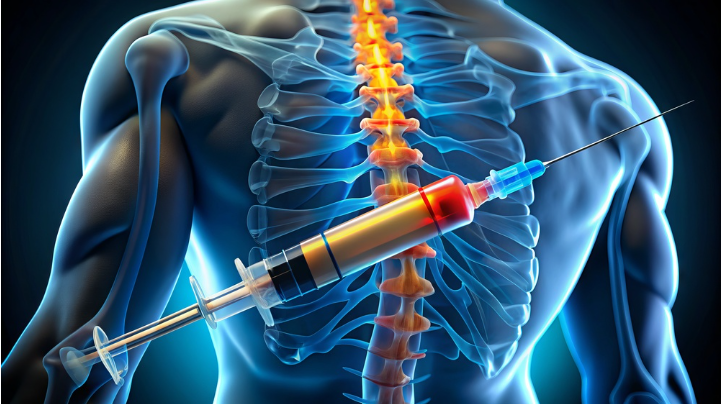
Back pain is so common that it is the leading cause of work limitations around the world. An estimated 50-80% of all adults will experience back pain at some point during their lives. Unfortunately, some people do not get away with one or two mild episodes. Back pain sets in and becomes a persistent, lifetime companion. If this sounds like you, you may have asked yourself whether or not you should consider epidural steroid injections.
Also known as transforaminal epidural steroid injections (TFESI), it is one of the treatments offered at Lone Star Pain Medicine. The Weatherford, TX clinic might recommend TFESI as a treatment for radiculopathy (a pinched nerve) or spinal stenosis.
The question is whether there is evidence in support of epidural steroid injections for either condition. The short answer is ‘yes’. A number of studies conducted in recent years have shown good results. The most recent is a study just published in the Neurology journal.
Effective for Short Term Relief
Researchers from a number of prominent universities got together and analyzed ninety studies conducted over the last 16 years. The studies examined the efficacy of epidural steroid injections for treating radiculopathy and spinal stenosis. It’s worth noting that all the studies involved conditions in the lower back (lumbar spine). The researchers did not look at cervical issues.
Without getting into the details, an estimated 24% of the patients receiving TFESI for radiculopathy reported less pain. In addition, 16% reported less disability for up to three months, while 11% reported less disability for six months or longer.
Results were slightly different for the spinal stenosis group. While TFESI did not have any meaningful impacts on pain, 26% of those who received the injections reported less disability for up to three months, while 12% reported less disability for six months or more.
In a nutshell, epidural steroid injections appear to provide short-term relief lasting from three to six months for some patients. That is in line with what Lone Star Pain Medicine discusses on its website.
It Works for Some, Not Others
Lone Star says that TFESI works for some patients but not for others. Those who do experience relief notice a difference within a week of injection. In addition, some patients do better with multiple injections spaced out over a total of six months.
Pain medicine doctors, including those at Lone Star, are quick to point out that epidural steroid injections do not correct the underlying cause of a patient’s pain. As such, a doctor might recommend other treatments, including physical therapy.
An Alternative to Invasive Back Surgery
While epidural steroid injections are not the best option for every radiculopathy or spinal stenosis patient, they are an alternative to invasive back surgery. I have used the word ‘alternative’ for a reason: back surgery is not always the best option either.
Back pain is extremely hard to treat. What works for one patient may not work for another. It can be very difficult for doctors and patients to find a treatment that ultimately provides long-term relief. Therefore, different things need to be tried until a patient experiences significant relief.
Because back surgery is considered a treatment of last resort, doctors tend to recommend less invasive treatments first. That is where TFESI comes in. It is minimally invasive and potentially capable of offering significant relief. Should you consider it for your back pain? That is something for you and your doctor to discuss. If you do decide to try it, be sure the treatment is administered by an experienced pain medicine doctor.