
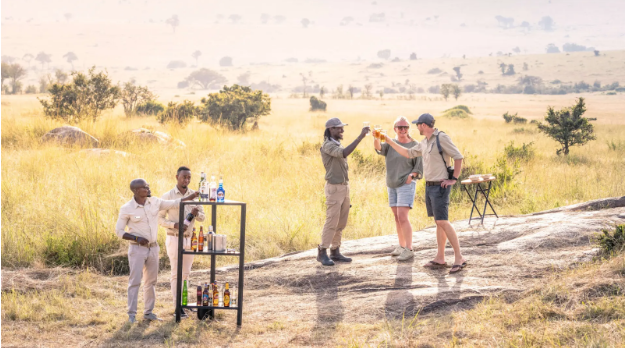
A Tanzania guided safari is not merely a tour with a knowledgeable companion. It is a masterclass in reading a living landscape — delivered by someone who has spent a lifetime learning its language.
Introduction
There is a fundamental difference between being in the African bush and truly experiencing it. Tanzania’s national parks and game reserves are, by any measure, extraordinary places — landscapes of such ecological richness and visual magnificence that even a cursory visit leaves a lasting impression. But without expert guidance, the deepest layers of meaning in those landscapes remain hidden. The leopard in the fever tree is invisible until a trained eye finds it. The behaviour of a lion pride at dawn is confusing until an expert naturalist explains what is unfolding. The tracks in the dust beside the water hole are meaningless until a skilled tracker reads them aloud like a sentence.
A Tanzania guided safari transforms wildlife observation into wildlife understanding. It is the difference between watching a film without subtitles and watching it in your own language — the same images, infinitely more meaning. Tanzania’s professional guide community is one of the finest in Africa, shaped by decades of rigorous training, deep cultural connection to the land, and an intimate knowledge of ecosystems that most visitors will spend a lifetime trying to comprehend.
Whether you are a first-time safari traveller stepping onto African soil for the first time or an experienced wildlife enthusiast seeking the deepest possible engagement with Tanzania’s extraordinary natural heritage, a guided safari is the single most important investment you can make in the quality of your experience. This guide explores what Tanzania guided safari involves, how they are structured, what makes a great guide, and how to choose the right guided experience for your specific interests, budget, and travel style.
What Is a Tanzania Guided Safari?
A Tanzania guided safari is any safari experience in which a professional, certified guide accompanies guests throughout their time in the field — on vehicle game drives, walking safaris, boat safaris, or night drives — providing expert interpretation of wildlife behaviour, ecology, natural history, and cultural context. The guide’s role extends beyond pointing out animals: they are naturalists, trackers, storytellers, safety officers, and cultural ambassadors whose knowledge transforms a game drive from a sightseeing exercise into a genuine encounter with the living complexity of an African ecosystem.
Guided safaris in Tanzania exist across a wide spectrum of formats. At one end, a shared group vehicle with a certified driver-guide offers an accessible and affordable introduction to Tanzania’s wildlife. At the other, a dedicated private naturalist with decades of specialist experience accompanies a single party across multiple ecosystems, delivering a depth of interpretation and personalised attention that represents the gold standard of safari guiding anywhere in the world.
What distinguishes Tanzania’s guided safari offering from comparable destinations is the combination of ecological diversity — the sheer range of habitats, species, and landscapes that a skilled guide can interpret — and the maturity of the country’s guiding profession, which has been developing continuously since the first professional safari operations were established in the colonial era and has evolved into one of the most rigorous and respected guiding traditions in Africa.
Types of Guided Safari Experiences in Tanzania
Guided Vehicle Game Drives
The vehicle game drive is the foundation of the Tanzania guided safari experience. Conducted in purpose-built open-sided or pop-top Land Cruisers that elevate passengers above the vegetation for unobstructed views, guided game drives take place in the early morning, mid-morning, and late afternoon — the periods of peak wildlife activity that bracket the heat of the midday hours when most animals rest in shade.
A skilled guide navigates not simply by road but by knowledge — anticipating where animals will be based on time of day, season, recent rainfall, prey movement, and the dozens of subtle environmental cues that an expert eye reads continuously. The best game drive guides position their vehicles with an artistry that balances proximity for observation with distance for animal comfort, and they deliver running natural history commentary that places every sighting in its full ecological context.
Private vehicle game drives — where a single party occupies the entire vehicle — allow the guide to tailor the pace, focus, and content of each drive entirely to the guests’ interests. Shared vehicle drives, standard on group departures, require the guide to balance multiple interests while maintaining the quality and attentiveness of interpretation for all passengers.
Guided Walking Safaris
The walking safari is, for many experienced safari travellers, the most profound guided experience available in Tanzania’s wilderness. Conducted on foot in the company of an armed professional guide and, typically, an additional scout, a guided walking safari removes the vehicle barrier between observer and observed and places guests directly in the landscape — breathing the same air, reading the same tracks, navigating the same terrain as the wildlife that inhabits it.
Walking safaris are available in several of Tanzania’s national parks and game reserves, including Ruaha National Park, Nyerere National Park, Arusha National Park, and selected private conservancies adjacent to the Serengeti ecosystem. They are conducted in the early morning, when temperatures are cool and wildlife is active, and are led by guides with specialist walking safari certification who are trained in animal behaviour, threat assessment, tracking, and emergency protocols.
The guided walking safari experience fundamentally changes the scale of wilderness perception. Insects, plants, soil chemistry, bird calls, and micro-terrain features that are invisible from a vehicle become vivid and meaningful on foot. A skilled walking guide transforms a two-hour bush walk into a comprehensive lesson in ecological interconnection — and occasionally, when a lion is distantly visible across the grass or an elephant moves through the trees ahead, into one of the most thrilling experiences that wildlife travel can offer.
Guided Boat Safaris
Tanzania’s southern parks — particularly Nyerere National Park and the waterway systems of the Rufiji River basin — offer exceptional guided boat safari experiences that deliver wildlife encounters of a uniquely intimate character. Conducted in small, quiet motorboats or traditional dugouts, guided boat safaris bring guests within extraordinary proximity to hippos, crocodiles, elephant families drinking at the bank, and the rich waterbird communities that congregate along Tanzania’s most productive river systems.
A skilled boat safari guide reads the waterway with the same fluency that a land guide reads the savannah — anticipating hippo surfacing patterns, reading crocodile behaviour, positioning the vessel to maximise sightlines while maintaining safe distances, and narrating the ecological drama of one of Africa’s most biodiverse aquatic environments.
Guided Night Drives
Night drives — conducted after dark with the aid of a handheld spotlight — reveal a completely different cast of wildlife characters than daytime game drives. Tanzania’s nocturnal ecosystem includes leopards and lions on the move, bushbabies leaping through acacia branches, civets and genets hunting along track edges, nightjars flushing from the dust ahead, and the glowing eyes of dozens of species that spend their days invisible in burrows and dense vegetation.
Night drives are available primarily in private conservancies adjacent to national parks, where the public vehicle restrictions that apply within park boundaries do not operate. They are led by guides with specific knowledge of nocturnal animal behaviour and spotlight technique — skills that differ significantly from daytime guiding and require dedicated training and experience.
Guided Cultural and Community Experiences
Tanzania’s guided safari offering extends beyond wildlife into the rich human landscapes that surround and interpenetrate the country’s protected areas. Guided visits to Maasai communities, Hadza hunter-gatherer camps near Lake Eyasi, Iraqw agricultural villages in the Ngorongoro Highlands, and the Swahili spice culture of Zanzibar add a dimension of human meaning to the wildlife experience that deepens travellers’ understanding of the relationship between people and the landscapes they share with Africa’s wildlife.
The best cultural guides are community members themselves — individuals whose knowledge is lived rather than learned, and whose ability to communicate the values, traditions, and ecological wisdom of their communities with authenticity and warmth creates encounters of genuine mutual respect and understanding.
What Makes an Exceptional Tanzania Guide?
Certification and Training
Tanzania’s professional guiding industry is regulated by the Tanzania Tourist Board (TTB), which licenses guides across several categories including driver-guide, walking safari guide, and mountain guide. The baseline TTB certification ensures guides have met minimum standards of ecological knowledge, vehicle operation, first aid, and guest management.
Beyond the baseline, the finest Tanzania guides hold advanced certifications from organisations such as the Field Guides Association of Southern Africa (FGASA) or have completed specialist training programmes in areas including ornithology, photography guiding, and cultural interpretation. Years of field experience — accumulated through thousands of game drives across multiple ecosystems and seasons — are ultimately the most important credential a guide possesses, as no training programme can fully replicate the depth of knowledge that comes from sustained, attentive presence in the landscape.
Ecological Depth and Specialisation
An exceptional Tanzania guide is not simply knowledgeable across all areas of natural history — they are deeply expert in specific aspects of the ecosystems they work in. The finest Serengeti guides understand the Migration’s movement patterns with a precision that allows them to position vehicles at crossing sites hours before the wildebeest arrive. The best Ruaha walking guides can read elephant behaviour at 200 metres with an accuracy that determines whether to approach or withdraw. Outstanding birding guides in Tarangire can identify 400 species by call alone.
Identifying a guide’s specific areas of deep knowledge — and matching those areas to your own interests — is one of the most important steps in planning a guided Tanzania safari.
Communication and Storytelling
Wildlife knowledge alone does not make a great guide. The ability to communicate that knowledge engagingly, accessibly, and with genuine enthusiasm — to transform technical ecological information into compelling stories that resonate with guests of every background — is a gift that separates the truly exceptional guides from the merely competent. The best Tanzania guides are natural storytellers whose narration gives every sighting its full narrative context: the evolutionary history of a behaviour, the ecological significance of a relationship, the cultural meaning of an animal in the traditions of the communities that have lived alongside it for generations.
Safety and Decision-Making
In Tanzania’s wildlife environments, guide decision-making can have consequences that go beyond the quality of the experience. Walking safari guides carry firearms not as a threat but as a last resort, and their ability to read animal behaviour, assess risk, and make calm, authoritative decisions under pressure is a professional skill of the highest order. Vehicle guides in the Serengeti manage complex situations — multiple vehicles at a sighting, animals behaving unpredictably, guests with conflicting interests — with a composure and authority that comes from deep experience and training.

How to Choose the Right Guided Tanzania Safari
Define Your Interests First
The starting point for choosing a guided Tanzania safari is not accommodation or destination — it is a clear articulation of what you most want to experience and understand. Wildlife photography, ornithology, predator behaviour, elephant ecology, cultural immersion, walking in the wilderness, chimpanzee trekking — each of these interests has an optimal guided safari format, an ideal destination, and a specific type of guide whose expertise matches your goals.
Research Guide Credentials Specifically
When evaluating safari operators, ask specifically about the guides who will be assigned to your safari — not just the operator’s general reputation. Request information on individual guide certifications, years of experience, areas of specialist knowledge, and, where possible, references from previous clients. The best operators are proud of their guides and discuss them readily; operators who are evasive about guide specifics are a concern.
Assess Vehicle and Group Size
For guided vehicle game drives, a private vehicle — dedicated entirely to your party — delivers categorically superior guiding quality to a shared vehicle. When a private vehicle is not financially viable, confirm the maximum number of passengers in your shared vehicle and the extent to which the guide will be able to tailor commentary and sighting time to individual interests within the group.
Prioritise Guide Over Accommodation
A recurring theme among experienced safari travellers is the recognition, usually achieved after multiple trips, that guide quality matters more than accommodation quality in determining the overall value of a guided safari. A mediocre lodge with an outstanding guide produces better memories than an outstanding lodge with a mediocre guide. When budget constraints require trade-offs, direct resources toward guide quality before accommodation upgrade.
Key Takeaways
- A Tanzania guided safari transforms wildlife observation into wildlife understanding — the difference between seeing animals and comprehending the ecological stories they are living out is entirely determined by the quality of expert interpretation.
- Tanzania’s guiding profession is one of Africa’s finest, shaped by decades of rigorous training, deep cultural connection to the land, and an intimate knowledge of ecosystems that represents a lifetime of accumulated learning.
- Guided safari formats span vehicle game drives, walking safaris, boat safaris, night drives, and cultural experiences — each delivering a distinct perspective on Tanzania’s extraordinary natural and human landscapes.
- Walking safaris are the most immersive guided experience available, placing guests directly in the landscape on foot and revealing the ecological complexity invisible from a vehicle with extraordinary intimacy and depth.
- Guide certification through the Tanzania Tourist Board is the baseline standard — the finest guides additionally hold advanced specialist certifications and bring years of dedicated field experience to every safari interaction.
- Private vehicle game drives deliver categorically superior guiding quality to shared vehicle formats — undivided guide attention, flexible pacing, and the ability to stay at sightings indefinitely are transformative advantages.
- Guide quality should be prioritised over accommodation quality when making budget trade-offs — an exceptional guide consistently produces richer, more lasting safari memories than any lodge upgrade can deliver.
Questions & Answers
Q: What qualifications should a professional Tanzania safari guide hold? A: At minimum, a professional Tanzania safari guide should hold a current Tanzania Tourist Board (TTB) guide licence, which certifies competency in wildlife identification, vehicle operation, first aid, and guest management. For walking safari guides, an additional armed escort licence is mandatory under Tanzanian law. The finest guides additionally hold certifications from internationally recognised organisations such as FGASA (Field Guides Association of Southern Africa) or have completed advanced specialist training in areas including ornithology, photography guiding, or cultural interpretation. Years of verified field experience — typically a minimum of five to ten years for senior guides — are ultimately the most important indicator of guiding quality and should always be asked about directly.
Q: How much does a private guided Tanzania safari guide cost? A: The cost of a private guide in Tanzania is typically embedded within the overall safari package price rather than quoted separately, making direct comparison between operators challenging. As a general indication, private vehicle hire — which includes a dedicated guide — typically adds $200 to $500 per day to the cost of a mid-range safari package. For senior specialist guides with advanced certifications and decades of experience, this premium can be higher. The investment is consistently rated by experienced safari travellers as the single best value upgrade available — delivering greater improvements in overall experience quality than any accommodation upgrade of comparable cost.
Q: Is a guided walking safari safe for first-time safari visitors? A: Yes — when conducted by a properly certified, experienced walking safari guide. Tanzania’s professional walking guides undergo rigorous training in animal behaviour, threat assessment, tracking, and emergency protocols, and they operate according to strict safety procedures that make the guided walking safari a managed rather than an uncontrolled experience. Guests are briefed thoroughly before departure on how to behave in the bush, how to respond to the guide’s instructions, and what to do in the unlikely event of an animal encounter requiring defensive action. First-time safari visitors consistently find guided walking safaris among the most extraordinary and memorable experiences of their Tanzania journey — and overwhelmingly report that their pre-walk nervousness was unfounded.
Q: What languages do Tanzania safari guides speak? A: The vast majority of professional Tanzania safari guides working with international visitors speak English to a high standard, reflecting the dominance of English-speaking visitor markets from the United Kingdom, United States, Australia, and South Africa. Many guides also speak Swahili (Tanzania’s national language), German, and some French or Italian, reflecting the diversity of European visitor markets. Operators working specifically with French, German, Italian, or Spanish-speaking client groups can in most cases arrange guides with the appropriate language capability — though availability of specialist naturalist guides with deep ecological knowledge in languages other than English and Swahili can be more limited, and advance booking is strongly recommended.
Q: What is the difference between a driver-guide and a specialist naturalist guide in Tanzania? A: A driver-guide holds a TTB licence that certifies competency in both vehicle operation and basic wildlife guiding — they drive the safari vehicle and provide wildlife commentary simultaneously. This is the standard guide format across most of Tanzania’s mid-range and budget safari operations. A specialist naturalist guide — sometimes called a “professional guide” or “head guide” — is a senior field professional with advanced certifications, deep specialist knowledge in one or more areas of natural history, and typically many more years of field experience than a standard driver-guide. Specialist naturalists often work on private vehicles for luxury operators and deliver a depth and quality of wildlife interpretation that categorically exceeds standard driver-guide commentary. For travellers with serious wildlife, photography, or ornithological interests, specifically requesting a specialist naturalist guide is strongly recommended.
Conclusion
At its most fundamental level, a Tanzania guided safari is an act of translation. It takes the vast, complex, ancient language of an African ecosystem — written in tracks and calls and behavioural cues and ecological relationships of staggering intricacy — and renders it legible to a human visitor who has, in most cases, never encountered anything remotely like it before.
The best Tanzania guides are extraordinary translators. They make the invisible visible, the incomprehensible clear, and the merely spectacular genuinely meaningful. They give names and stories and ecological context to animals that might otherwise remain beautiful but opaque. They direct your attention to things your eyes have been passing over without seeing — a chameleon on a branch, the fresh excavation of an aardvark burrow, the particular tension in a herd of impala that means a predator is nearby and hidden.
In doing so, they do something that goes beyond tourism and beyond natural history education. They reveal, with patient expertise and genuine passion, the world as it actually is: not as a backdrop to human activity but as the original and irreducibly complex living system from which all human activity ultimately derives. Tanzania’s landscapes hold that revelation with a clarity and power found nowhere else on Earth.
Find a great guide. Go into the bush with open eyes and an open mind. Let Tanzania speak.